Rethinking the Western House: A Couple Decides to Build One Last Time
On Colorado’s Front Range, a new home reflects a broader shift toward architecture defined by reduced risk and a closer response to place.

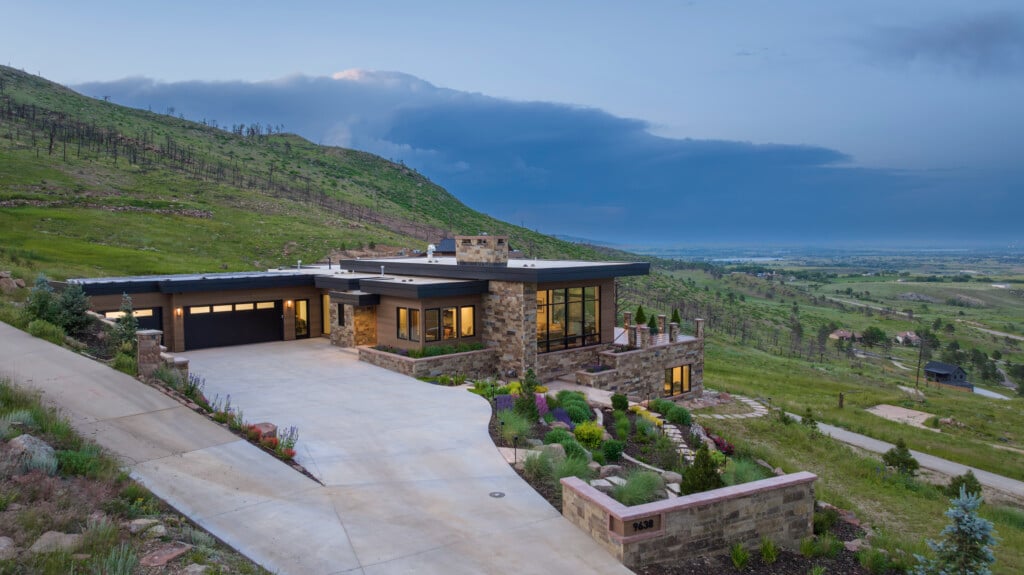
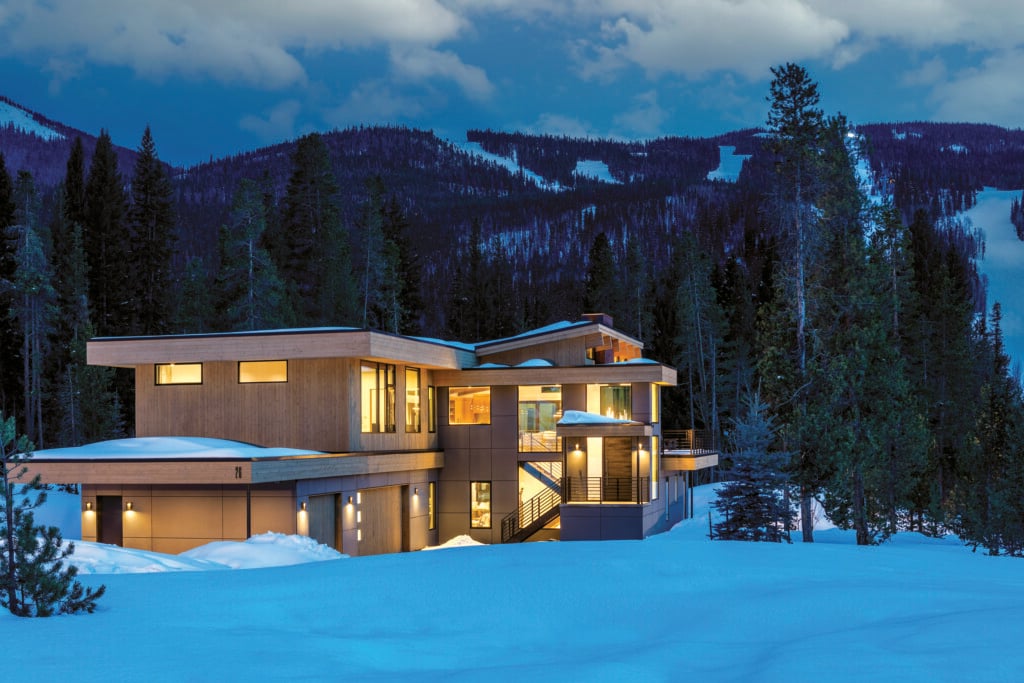
Designed with wildfire protection in mind, the home incorporates noncombustible materials, including a Class A single-ply membrane roof, cementitious siding that mimics wood, stone veneer and metal-wrapped fascia. | Photo: Karl Neumann
This story begins, as many in the West now do, with wildfire. In October 2020, the Cal-Wood Fire swept across the eastern flank of the Front Range just north of Boulder, erasing the Mountain Ridge community in a matter of hours. All 17 homes were lost. Evacuation came quickly. “We were told to leave immediately,” the homeowners recall, “and were not able to take anything.”
They lost everything, but the site endured, with long views stretching east across the plains and south all the way to Pikes Peak. The terms of rebuilding had fundamentally changed for the homeowners, however. “Foremost in our minds was not being so vulnerable to fire again,” the wife says. At the same time, they were thinking long-term. “This is the last house we’re planning to build,” says the husband, a retired University of Colorado professor.

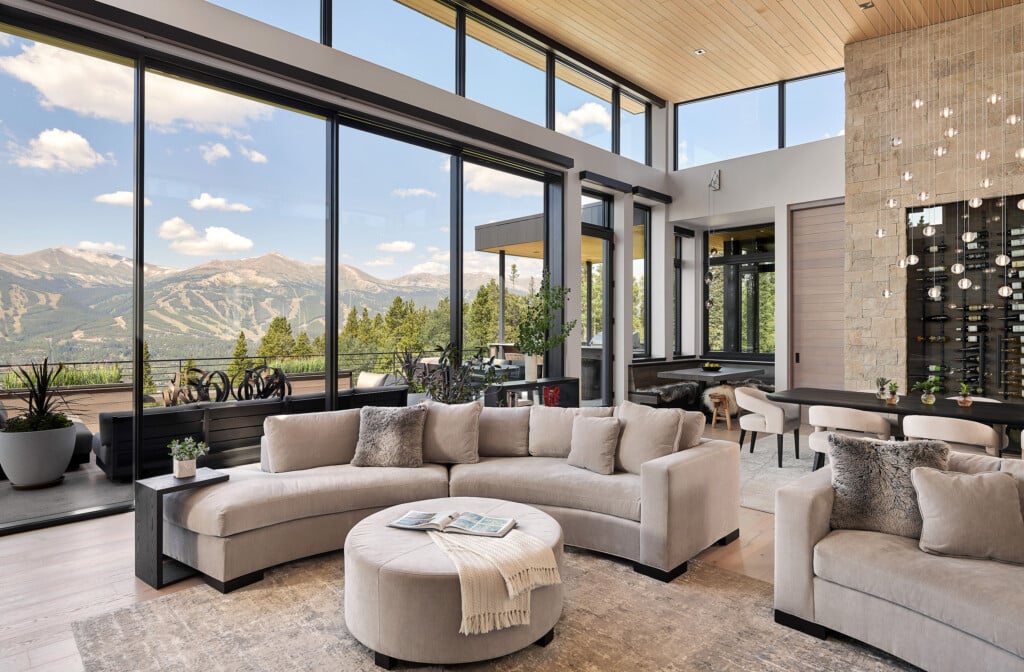
Living Room Opening to sweeping 270-degree views of the Flatirons, the plains and distant Denver, the living room creates a seamless connection between the home’s interiors and the surrounding Colorado landscape. | Photo: Karl Neumann
Working with Robert Gilbert of Stillwater Architecture (with offices in Boulder and in Big Sky, Montana), the homeowners began with a general inclination toward Mountain Modern style. The process, Gilbert notes, was highly collaborative, shaped by early conversations about how the owners want to move through their home, how they entertain, and how the home might support aging in place.
The new home is set into the hillside, anchoring it to the terrain while reducing exposure to wind and fire. Rather than a single mass, it is composed of a series of interlocking volumes.

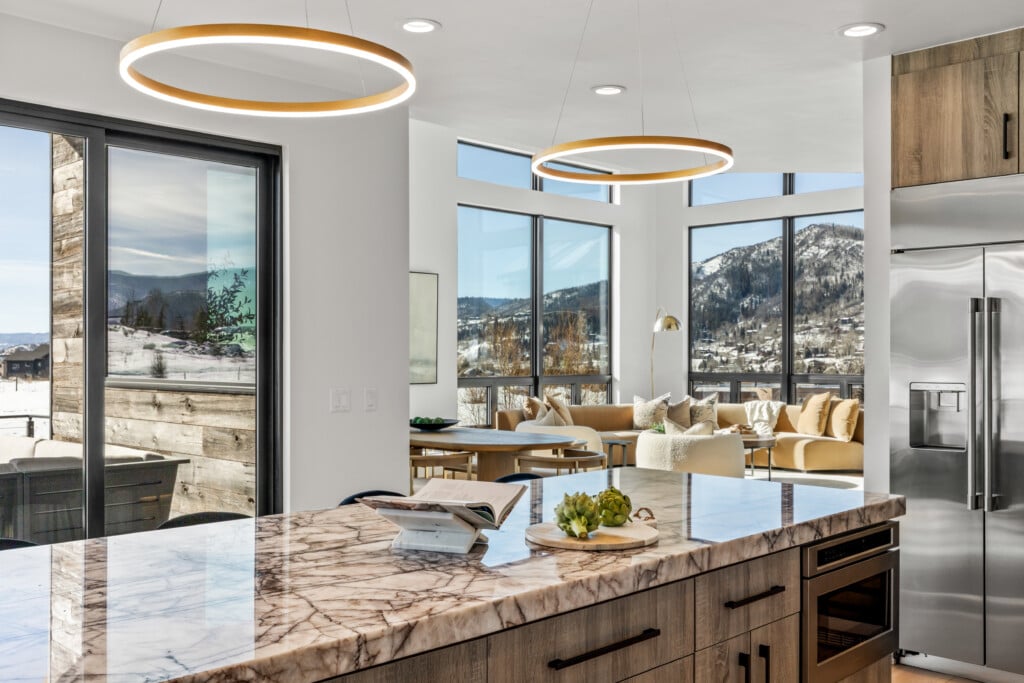
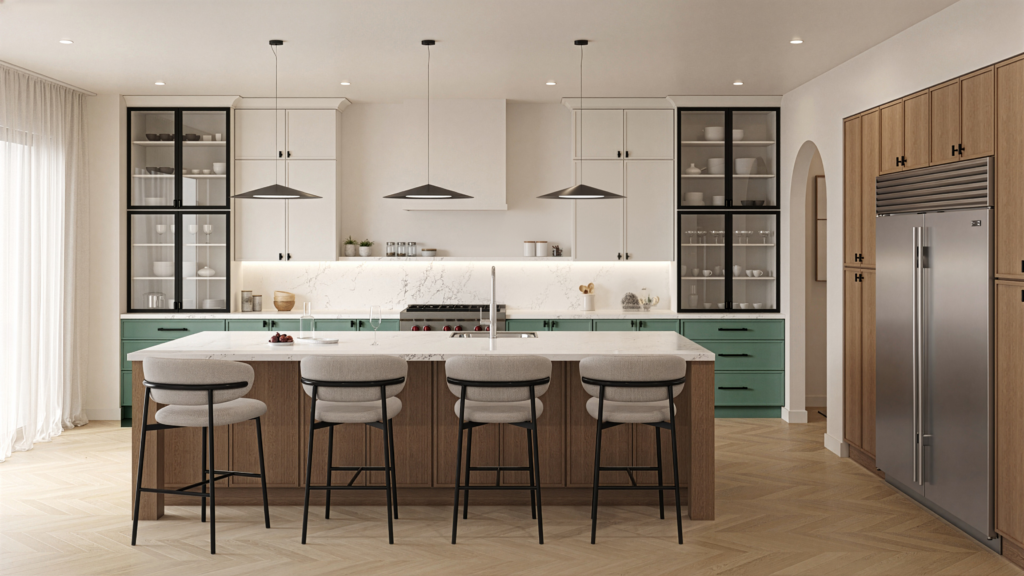
Kitchen Designed for gathering, the open kitchen balances warmth and function, with a spacious pantry keeping everyday essentials close at hand yet neatly out of sight. | Photo: Karl Neumann
Fire-resistant building materials were central to the fire-prevention strategy. The exterior is composed almost entirely of noncombustible elements: a Class A single-ply membrane roof, cementitious siding, stone veneer, aluminum windows and metal-wrapped fascia. Each choice reduces potential fuel load while maintaining a calibrated visual warmth. “They wanted the feel of wood,” Gilbert explains, “but without introducing risk, so we used materials that read as wood but don’t burn.”
The fire-prevention strategy extends to the landscape. A defensible perimeter of rock, sand and concrete was designed to interrupt the path of a grass fire. Lawns were minimized in favor of gravel beds and perennials, reducing fuel load and water use.

Powder Room A sculptural white vessel sink contrasts with dark counter and floors in the compact powder room. | Photo: Karl Neumann
Inside, the material palette shifts to wood flooring and warm interior finishes. The open floor plan is organized around light and views, with expansive windows in all the primary living spaces. The floor plan also looks quietly toward the future. Kitchen, dining, living and the primary suite are arranged on a single level. Wide doorways, an elevator and “curbless” showers support ease of movement and reflect the couple’s intention to age in place. “We’re thinking about how we’ll live here, long term,” the husband says.
For Gilbert, this project reflects a broader shift in fire-prone regions. “As the West becomes drier, these strategies are no longer optional,” he says, describing how houses are being reshaped, how they meet terrain, how they manage risk, and how they are built to endure. The resulting homes are more deliberate in their relationship to place and defined by an expectation that resilience is now a basic condition of design.
Design Details
Architecture: Stillwater Architecture
As seen in Colorado Homes & Lifestyles’ July/August 2026 issue.

Garden A defensible perimeter of rock, sand, concrete and resilient plantings surrounds the home. | Photo: Karl Neumann